Every Sunday night we are going through a book of the Bible. As we go, we are looking at some major ways that Jesus shows up in the Old Testament book. Our study through the Bible will resume on Sunday Night, January 24. Make plans now to come and learn with us! The following are some major areas in the book of Genesis where we can clearly see Jesus:
Where does Jesus appear in Genesis?
The preexistent Christ, the living Word, was very much involved in the creation. "All things were made through Him, and without Him nothing was made that was made" (John 1:3). In Genesis 3:21, God had to make a covering of skins for Adam and Eve when they sinned. Animal blood had to be shed for the covering of sins, foreshadowing that Jesus the Lamb of God would have to die for the covering of our sins. Jesus' ministry is anticipated in Genesis 3:15, suggesting that the "Seed" of the woman who will bruise the Serpent's (Satan's) head is Jesus Christ, the "Seed" of Abraham mentioned by Paul in Galatians 3:16. Melchizedek is the mysterious king-priest of Genesis 14. The Letter to the Hebrews identifies him as a type of Jesus Christ, our King and High Priest (Heb. 6:20).
The greatest revelation of Christ in Genesis is found in God's covenant with Abraham in chapters 15 and 17. The promises God made to Abraham are fulfilled in Jesus, as Paul explains in detail in Galatians. Much of the Bible is built upon the Abrahamic covenant and its flowering in Jesus Christ.
Abraham's willingness to sacrifice his son Isaac at God's command bears a startling similarity to the crucial event of the New Testament. "Take … your only son Isaac, whom you love … and offer him there as a burnt offering" (22:2) reminds us of God's sacrifice of His only Son for the sins of the world. Finally, Jacob's blessing upon Judah anticipates the coming of "Shiloh," to be identified as the Messiah. "And to Him shall be the obedience of the people" (49:10).
Christ is also seen in people and events that serve as types. (A "type" is a historical fact that illustrates a spiritual truth.) Adam is "a type of Him who was to come" (Rom. 5:14). Both entered the world through a special act of God as sinless men. Adam is the head of the old creation; Christ is the Head of the new creation. Abel's acceptable offering of a blood sacrifice points to Christ, and there is a parallel in his murder by Cain. Melchizedek ("righteous king") is. "made like the Son of God" (Heb. 7:3). He is the king of Salem ("peace") who brings forth bread and wine and is the priest of the Most High God. Joseph is also a type of Christ. Joseph and Christ are both objects of special love by their fathers, both are hated by their brethren, both are rejected as rulers over their brethren, both are conspired against and sold for silver, both are condemned though innocent, and both are raised from humiliation to glory by the power of God.
May God bless us as we endeavor to learn more about the Bible.
- Bro, David Crowe
Tuesday, January 12, 2010

Monday, January 11, 2010
Him, Who? Part 1
As I have mentioned in a previous article, the term doxology refers to worship of God that is a response to God and is made up of God's attributes, characteristics, or behavior. Over the next few weeks, I will be writing a series of articles called "Him, Who?" The purpose of this study is to point out moments throughout Scripture where God is praised using texts that magnify His attributes. Specifically, these texts have the form of naming God, either using the pronoun, "Him," or referring to Him by name, followed by a qualitative statement.
The first example of this format is found in Genesis 9:26. It says, "Blessed be the Lord, the God of Shem." This one is a little more hidden than some of the other texts we will be studying, but it is just as important to understand. In the Old Testament, often these texts refer, as this one does, to a certain ownership that God's people have. It associates God with a person or people that God has made a covenant with. The importance of a statement such as this is, first, that God is a god who loves, provides for, and protects individuals. Unlike the false gods of the nations, who associate themselves with things outside of humanity like geography, natural phenomenon, or political forces, such as Ra, the Egyptian god of the sun, or Molech, the god of the Ammonites, the Living God associates Himself with individual people. Secondly, He makes promises to His people, and His name is a testimony to the fact that He keeps those promises. To say that God is the God of Shem is to say that He keeps His promise to Noah to never strike down all of Noah's family. He actually says that He will not strike down the entirety of the creation again, but because of the salvation Noah's family received on the ark, the entirety of the human component of God's creation is Noah's family, and so it is a promise specific to Noah. Later, we will see that God will be called the God of the Israelites, because He promised to be their God, and that they would be His people. Lastly, God allows His name to be carried by people who are faithful to Him. We see this evident in the term we get from the book of Acts, "Christian." God has promised to always maintain a group of people that are faithful to Him, referred to throughout Scripture as a "remnant."
It is for these three reasons that we ought to worship the One True and Living God: that He loves us personally, keeps His promises, and will always keep us and never forsake us. And, by the Bible's example, we ought to point out in words that this is the case. Thanking and praising God for who He is and what He has done is the center of what we call worship.
- Mark Whitaker
The first example of this format is found in Genesis 9:26. It says, "Blessed be the Lord, the God of Shem." This one is a little more hidden than some of the other texts we will be studying, but it is just as important to understand. In the Old Testament, often these texts refer, as this one does, to a certain ownership that God's people have. It associates God with a person or people that God has made a covenant with. The importance of a statement such as this is, first, that God is a god who loves, provides for, and protects individuals. Unlike the false gods of the nations, who associate themselves with things outside of humanity like geography, natural phenomenon, or political forces, such as Ra, the Egyptian god of the sun, or Molech, the god of the Ammonites, the Living God associates Himself with individual people. Secondly, He makes promises to His people, and His name is a testimony to the fact that He keeps those promises. To say that God is the God of Shem is to say that He keeps His promise to Noah to never strike down all of Noah's family. He actually says that He will not strike down the entirety of the creation again, but because of the salvation Noah's family received on the ark, the entirety of the human component of God's creation is Noah's family, and so it is a promise specific to Noah. Later, we will see that God will be called the God of the Israelites, because He promised to be their God, and that they would be His people. Lastly, God allows His name to be carried by people who are faithful to Him. We see this evident in the term we get from the book of Acts, "Christian." God has promised to always maintain a group of people that are faithful to Him, referred to throughout Scripture as a "remnant."
It is for these three reasons that we ought to worship the One True and Living God: that He loves us personally, keeps His promises, and will always keep us and never forsake us. And, by the Bible's example, we ought to point out in words that this is the case. Thanking and praising God for who He is and what He has done is the center of what we call worship.
- Mark Whitaker
Saturday, January 9, 2010
Snow/Ice Advisory for Worship Services on Sunday, January 10
From looking at our parking lot, we are going to have church tomorrow. Please be cautious as you move about the parking lot and if you have any real concerns, please stay home. You can assess the situation for yourself by looking at the following photos that were taken today at 5:30PM.
Special thanks to Glen Peavler and others who have worked hard to let us have church tomorrow!
Click on any of the following photos to enlarge them:




Special thanks to Glen Peavler and others who have worked hard to let us have church tomorrow!
Click on any of the following photos to enlarge them:

The Stairs in this photo are the fire escape stairs:

The outside East stairs are dry and have salt on them:

The back lot has the most ice with some black ice spots near the drain pipes:

Here is a black ice patch near one of the back drain pipes:

The side lot looks great:

Front steps are dry and salted:


Thursday, January 7, 2010
Brit Hume, Tiger Woods, and Jesus Christ
Journalist Brit Hume isn’t backing down from his recent comments that Tiger Woods should turn to Christ for redemption and forgiveness.
As he says in the follow-up interview below, “Jesus Christ offers Tiger Woods something he badly needs.”
Last year on the Between Two World's blog, the following was mentioned about Hume and what he planned to be doing in his retirement.
Peter Wehner also looks at the criticism Hume is receiving.
Here are some important points:
What are your thoughts about all of this? Add your comments below.
- Bro. Dave
As he says in the follow-up interview below, “Jesus Christ offers Tiger Woods something he badly needs.”
Last year on the Between Two World's blog, the following was mentioned about Hume and what he planned to be doing in his retirement.
Brit Hume, the Washington managing editor at Fox News and one of the best in the business, is retiring from his position. Starting in 2009 he’ll become senior political analyst and work 100 days in the year.Denny Burk also includes this quote from Hume’s interview on WTOP News radio:
When public figures retire at the top of their game they often cite wanting to spend more time with their family. And that’s the case here. But Hume offers an additional reason–one rarely cited in these situations:
I certainly want to pursue my faith more ardently than I have done. I’m not claiming it’s impossible to do when you work in this business. I was kind of a nominal Christian for the longest time. When my son died (by suicide in 1998), I came to Christ in a way that was very meaningful to me. If a person is a Christian and tries to face up to the implications of what you say you believe, it’s a pretty big thing. If you do it part time, you’re not really living it.From another interview:
And since my son died, I have been, really, I felt rescued by God and by Christ. I have an intense desire to pursue that more ardently and have it be a bigger part of my life than it has been.When asked how that will translate, Hume responded, “It’ll translate into Bible study.”
Christianity is uniquely and especially about redemption and forgiveness. That is what the cornerstone of what the faith is about. Now other faiths aren’t hostile to the idea, but think of what the message of Christ and Christianity is. It is that the God of the universe sent His only begotten Son, who died a hideous death on the cross, to atone for all of our sins. And we are thereby offered through that act a new covenant in which we are offered forgiveness and redemption on a continuing basis in return for our faith in God and our continuing efforts to live the Christian life. That is a unique doctrine.
Peter Wehner also looks at the criticism Hume is receiving.
Here are some important points:
The intensity of offense taken at what Hume said is itself revealing. Perhaps it can partly be chalked up to shock; maybe Shales and Hume’s other critics are genuinely surprised to learn that those who hold the Christian faith do so because they believe the claims of Christ are true, that His story is real. But of course if Christians didn’t believe their faith were true, there would be no reason to embrace it, as the Apostle Paul himself understood. . . .HT: Justin Taylor
I should add that when Christopher Hitchens, whom I like and whose company I enjoy, appeared on television shows promoting his book God Is Not Great: How Religion Poisons Everything, he was far more critical of Christianity than Hume was of Buddhism. Yet I don’t recall the Left saying that those criticisms were inappropriate for public debate. In fact, they weren’t — and neither are Hume’s words. Furthermore, those who are unnerved by Hume’s “sectarianism” were untroubled by the aggressive atheism of Hitchens.
What are your thoughts about all of this? Add your comments below.
- Bro. Dave
Tuesday, January 5, 2010
Daily Devotionals
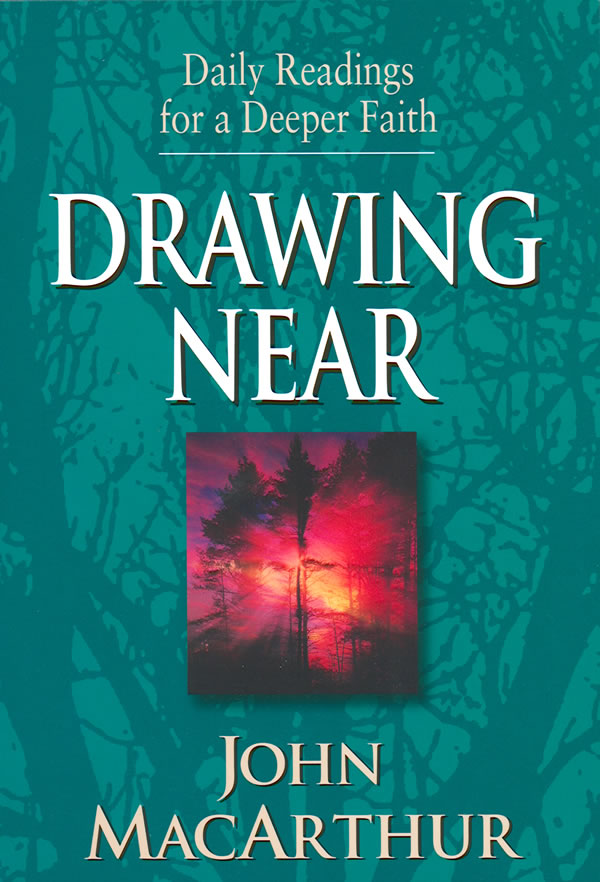
One thing I enjoy reading alongside with my Bible each new year is a daily devotional. There are some amazing daily devotionals out there that I would recommend to anyone who is looking: Classic ones like Morning and Evening by Charles Spurgeon, and My Utmost for His Highest by Oswald Chambers.
The following comes from a devotional that I am reading through this year: Drawing Near: Daily Readings for a Deeper Faith by John MacArthur. The following is his entry for Tuesday, January 5:
"God...has blessed us with every spiritual blessing in the heavenly places" (Eph. 1:3, emphasis added).
It's been said that some Christians are so heavenly minded, they're no earthly good. But usually the opposite is true. Many Christians are so enamored with this present world that they no longer look forward to heaven. They have everything they want right here. The health, wealth, and prosperity doctrine has convinced them that Christians can have it all, and they pursue "the good life" with a vengeance.
Despite the prevalence of such thinking, the old Negro spiritual well says, "This world is not my home. I'm just a passin' through."
Paul reminds us of that truth in Philippians 3:20: "Our citizenship is in heaven, from which also we eagerly wait for a Savior, the Lord Jesus Christ." That's why we must set our minds on heavenly, not on earthly things (Col. 3:1- 2). Our deepest affections and highest aspirations should center there. Our actions and decisions should reflect heavenly priorities, not earthly indulgences.
Even though we live in a sin-stained world and must constantly fight against its corrupting influences, God hasn't left us stranded. He extends to us all the rights and privileges of our heavenly citizenship. Let that assurance encourage you today to live to His glory and rely on His heavenly provisions. Take care not to let impure aspirations or trivial pursuits distract you from your heavenly priorities.
Suggestions for Prayer:
- Tell Jesus how thankful and full of praise you are because of the place He is preparing for you in heaven (John 14:1-3).
- Pray for a greater awareness of the fleeting value of this world and the surpassing value of the world to come (1 John 2:17).
May God bless us to grow deeper in our faith this year!
Monday, January 4, 2010
10 Common Myths about Tithing

1) Myth - The New Testament never commands us to tithe.
Truth - Jesus expected it (Matt. 23:23; Luke 11:42) and Paul encouraged it (2 Cor 9:6, 7; 1 Cor. 16:2)
2) Myth - Nowhere in the Bible does it say to give a 10th of my income.
Truth - The Hebrew word for tithe, "ma'aser" literally means "tenth" and can be correctly translated as such.
3) Myth - I can't afford to tithe.
Truth - You can't afford not to tithe!
4) Myth - Tithing will make me rich!
Truth - Tithing may not make you rich, but it will make you blessed. (Jesus said blessed are the poor)
5) Myth - Tithing will make me poor!
Truth - God promises to bless the one who tithes.
6) Myth - All tithe money goes to the pastor.
Truth - The pastor has a set salary no matter what is gathered in an offering.
7) Myth - The Pastor knows the tithing records.
Truth - Not in this church, and not this pastor! (and I like it that way!)
8) Myth - If I do not tithe, I am not sinning.
Truth - God says you are robbing him, and that is a sin. (Malachi 3:8)
9) Myth - It is ok for me to tithe from my net income and not gross income.
Truth - Your gross income is your true income.
10) Myth - As long as I give my 10 percent, I can do whatever I want with the other 90 percent.
Truth - 100 percent of our money should be spent in a way that honors God.
Subscribe to:
Posts (Atom)


 Posts
Posts

